



 Date: 18 November 2013
The issue of northern identity has resurfaced recently. Since the deindustrialisation of the 1980s – and with social mobility reversing at a disturbing rate over the last 30 years – the gap between north and south has grown bigger. With London’s rise as a political and cultural superpower, what are the chances today of another Eddie Waring breaking through and rising to the top, asks Anthony Clavane.
 Date: 17 November 2013
In British Future’s latest report, Do Mention The War, we highlight why the first world war remains a pivotal cultural reference point for understanding the last century and how it shaped the country we have become today. It draws on original research into what the public know and don’t know about the first world war, why they think next year’s centenary will matter and what they want it to be about.
Date: 15 November 2013
One artist’s plan to paint every inhabitant of St Davids, Britain’s smallest city, will act as a valuable social history of an integrated Welsh community. Grahame Hurd-Wood, 55, has already spent 14 years producing pictures of people in the city, ranging from councillors and bishops to children and students, and plans to spend the next few years painting the remainder, writes Jemimah Steinfeld.
Date: 15 November 2013
On 10th November thousands of bikers dressed in red rode around the 117-mile clockwise carriageway of the M25 to pay tribute to the war dead on Remembrance Sunday. Anton Shelupanov was one of the participants. Here he tells British Future about what it was like to join the so-called M25 poppy and why commemorating the first world war remains important today.
Date: 10 November 2013
On Monday 11th November, I have been selected to read The Exhortation at my school’s Remembrance Day service. Are the sufferings of those who lived during the first world war lost on my generation, who are living almost 100 years after its outbreak, asks Matilda Neill.
Date: 8 November 2013
“This is not a celebration; it is a commemoration. There will be no triumphalism or jingoism,” Culture Minister Helen Grant concluded at the House of Commons debate on the commemoration of the first world war held on Thursday 7th November. The emphasis on getting the tone right, while seizing the opportunity of the centenary to deepen understanding of local, national and international history was a recurring theme, writes Sunder Katwala.
Date: 7 November 2013
A year ago, I was angry. Female genital mutilation (FGM) had started to appear in the UK news more and more. In my community though, no one spoke about it. Back in Sierra Leone, where I come from, 94% of girls are cut; I wasn’t an exception. FGM changes you. They say they cut you so you become a woman. In a way it’s true: you lose your innocence in that one moment, writes Sarian Kamara.
Date: 7 November 2013
The People’s Centenary: tracking public attitudes to the First World War Centenary 2013-2018 The national commemorations of the First World […]
Date: 7 November 2013
Last week British Future director Sunder Katwala wrote an article in the Guardian arguing that people should not feel uncomfortable about celebrating their Englishness, in response to David Edgar’s piece about the Festival of Englishness making him feel “queasy”. In this guest blog Eddie Bone, campaign director for the campaign for an English parliament, challenges Katwala’s article and offers his own argument on the future of Englishness.
'Three weeks, three months, or three years? The uncertain future of Keir Starmer'' – new
@sundersays column for @easterneye :
https://www.easterneye.biz/keir-starmer-resignation-speculation
Most of the public does not like the way in which the England flag has been dragged into polarised debates about identity and race, according to new research published today by British Future, one month out from St George's Day. [Thread]
Faith leaders urge Government to 'slow down and rethink' changes to settlement rules, in a letter published in The Guardian today 🧵
Angela Rayner has warned that the Labour government proposals to make it harder for migrants already in the UK to settle permanently are "un-British" and a "breach of trust" - BBC News report

Angela Rayner warns against 'un-British' immigration reforms
Most migrant workers will have to wait longer to qualify for permanent residence under the government's proposals.
www.bbc.co.uk
Faith leaders urge government to rethink settlement changes that “risk undermining” community cohesion [1/3]
Our @sundersays will be on @BBCRadio4 'The Week in Westminster' at 11 today discussing the new govt cohesion plan and definition of anti-Muslim prejudice

BBC Radio 4 - The Week in Westminster
Radio 4's weekly assessment of developments at Westminster
www.bbc.co.uk
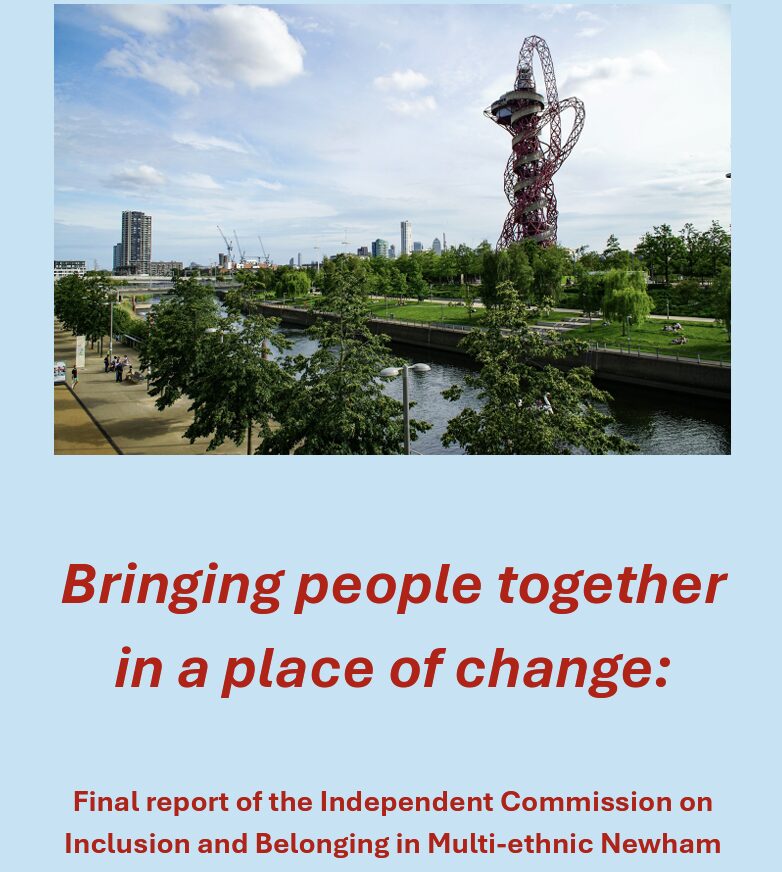
An independent commission examining inclusion and belonging in Newham – London's most diverse borough – has today published its final report, setting out recommendations to strengthen community connection and make the borough a national beacon of good practice [1/3]
"Her focus on so-called ‘pull-factors’ – an approach tried and tested without success by Conservative Home Secretaries before her – has been shown not to work." Our @sundersays on Home Secretary Shabana Mahmood's speech today.
The Modern Cockney Festival opens next week with events throughout March, including on the 16th marking the 90th anniversary of the Battle of Cable Street.
More details at: https://www.tickettailor.com/events/moderncockneyfestival
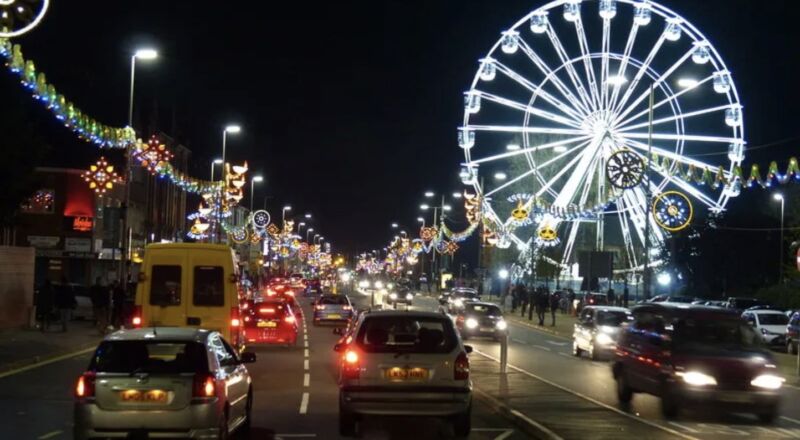
'From Diwali to Discord: What Happened to Leicester’s Shared Belonging?'
As a new report examines the 2022 Leicester unrest, our Avaes Mohammed speaks to people from South Asian communities in the city about what needs to change. [1/2]