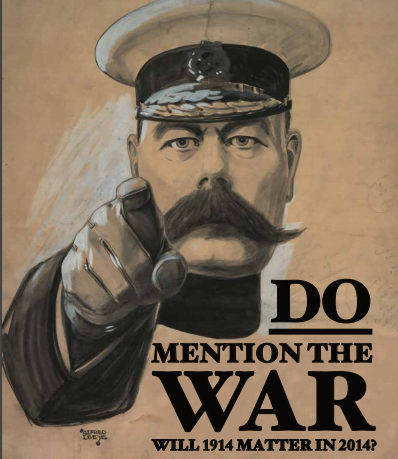




Will 1914 matter in 2014? Nobody who experienced the war is still alive. Most of us struggle to recall more than the most basic facts about what happened and why. Yet, the first great global conflict remains a pivotal cultural reference point for understanding the last century and how it shaped the country we have become today.
In our report, Do mention the war, we highlight these points and more. Do mention the war draws on original research into what the public know and don’t know about the first world war, why they think next year’s centenary will matter and what they want it to be about.
The report features polling carried out for British Future by YouGov, which found that Britons struggle to tell the first world war and the second world war apart. For example, more people think Britain declared war in August 1914 because Germany invaded Poland (as was the case in 1939) than Belgium: only 13% knew the right answer.
Drawing on public workshops in England, Scotland and Wales, alongside the new national polling, the report also reveals why most people think we should seize this chance to learn, and explores which meanings of the centenary people agree on and which ones don’t.
Other highlights of Do mention the war include:
Race hatred still rife on X and Ofcom risks being 'played' by the platform - @britishfuture response to today's Ofcom update: https://www.britishfuture.org/race-hate-on-x/
'It's a posh word for racist, basically.'
With ethnonationalism on the rise in British politics, @Sundersays gives @IainDale an unfiltered explanation on what it means.
WE'RE RECRUITING: Senior Researcher on race equity Salary £42k, London.
Applications close Mon 2 November.
More details: https://www.britishfuture.org/jobs/senior-researcher-on-race-equity/
TODAY 10am at Labour Party Conference:
'Can Labour get immigration right?' (10am, ACC Arena) with @oliviabaileymp; @EmilyAGraham2; @sundersays @Holly_JoyB
'A Decade After the Brexit Vote: How Close Should the UK Get to Europe Now?' Today 1pm at Labour Conference with @AnnelieseDodds @RSylvester1 @sundersays and Andrew Lewin MP
https://www.britishfuture.org/event/british-future-at-party-conferences-2026/
Today 11.30am at Labour Conference 'What Do Ethnic Minorities Want from Labour on Race?' with
@AJogee @rokhsanafiaz @JOwusuNepaul @sundersays
and Kudsia Batool, TUC Director of Equalities.
(FGF pod, Arena Room, ACC downstairs)
This morning 9.30 at Labour Conference:
'Bridging Divides: Why Generations Matter' With @pauldaviesmp.bsky.social @sundersays.bsky.social
Olivia Field, @jocoxfoundation.bsky.social
Emily Abbott, Intergenerational England
Shelley Hathaway-Batt, Clarion Futures
'Can Labour get immigration right?' Join us at Labour Party Conference to discuss on Tues 29th (10am, ACC) with @oliviabaileymp; @EmilyAGraham2; @sundersays @_katedevlin + others TBC.
https://www.britishfuture.org/event/british-future-at-party-conferences-2026/
'A Decade After the Brexit Vote: How Close Should the UK Get to Europe Now?' Join us for this Labour Conference fringe panel Mon 28th 1pm with @AnnelieseDodds; @RSylvester1; Andrew Lewin MP; and our @sundersays
Join us Mon 28th 11.30am at Labour Conference for 'What Do Ethnic Minorities Want from Labour on Race?' with @AJogee; @rokhsanafiaz; @JOwusuNepaul; @sundersays and Kudsia Batool, TUC Director of Equalities.
(FGF pod, Arena Room, ACC downstairs)