



Keir Starmer has faced a recurring challenge since he became Prime Minister: to tell a story about Britain. His speech in Hastings on Thursday – nineteen months after he entered Downing Street – was intended as his response: offering his account of the state of the nation, the purpose of his government, and his framing of the choice that the public will face at the next General Election, between different visions of Britain’s future.
Starmer’s immediate challenge was how to get heard. His vision of a Britain “bound by values, common endeavour and responsibilities we owe to one another,” had to compete with fizzing anger across Westminster and beyond it about Peter Mandelson believing he could play by entirely different rules. Having both hired and fired him as the UK Ambassador to the United States, Starmer now accused Mandelson of having “betrayed our country, our Parliament and my party,” as more revelations emerged. It would be hard to construct a scenario that would be more damaging not just to the reputations of the individuals involved, but to public trust in politics in general.
Yet the Prime Minister was making an important substantive argument – even if it was unclear how many people would hear it.
“Our ‘social contract’ is currently nowhere near strong enough to weather the storms of this world,” he argued. Starmer’s account of the pressure on cohesion largely reflects and chimes with the key findings of The State of Us – last year’s authoritative but sobering report from British Future and Belong on the condition of cohesion in Britain. It found a combination of economic pessimism, declining trust in political institutions and a polarised politics that can do more to amplify divisions than to seek to resolve them, exacerbated by the febrile tinderbox of social media. The State of Us found some reasons for grounded hope too, in an almost ubiquitous sense of local pride, despite the pressures and challenges of these volatile times – but set out why creating the conditions for cohesion cannot be left to local communities alone.
“If you want to know where hope lives in Britain – it is in our communities, that is where people come together,” Keir Starmer said today. His focus in the Hastings speech was on rebuilding from the bottom up – including extending the government’s Pride in Place programme. Patient efforts to build closer, connected neighbourhoods can strengthen resilience to hate – but contesting the current scale of division requires a national response too.
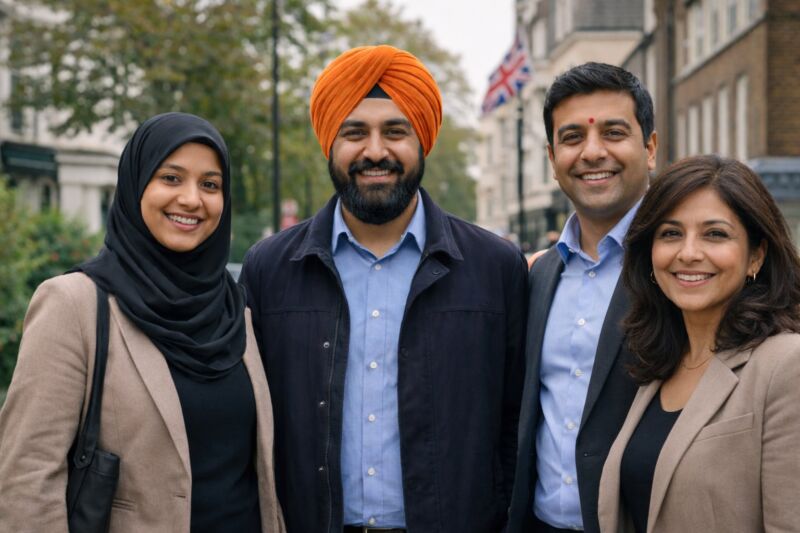
“I believe Britain is stronger as a tolerant, decent and respectful country,” Starmer said, reprising his argument at the last Labour Party conference that the right response to contested arguments about identity is not to retreat from questions and symbols of national identity, but to make an argument for a British model of an inclusive patriotism, reflecting the make-up of our multinational, multi-ethnic and multi-faith society.
The role of national government is to protect the non-negotiable foundations of a liberal democratic society – against challenges from intolerant extremisms of every stripe – while seeking to champion an approach to identity that seeks to transcend a polarised zero-sum approach to competing claims and grievances, so that we respect difference, and focus most on what can bring people together.
The Prime Minister made a vocal challenge to those who cannot accept that ethnic minorities can be English, Scottish and Welsh as well as British. There has been a common-sense consensus on this over several decades, particularly for minorities born here, reflected in the symbolism of our national sporting teams and ethnic diversity becoming a new norm in our public life. It was important to hear the PM push back against those seeking to upturn this consensus in favour of national identities that exclude people due to the colour of their skin or where their parents were born.
He also evoked the ‘British way’ on integration, arguing that this has long been grounded in the “fairness of the two-way street” in balancing rights and responsibilities. Yet there is widespread challenge to his argument that this government’s proposed reforms to settlement and citizenship reflect these values. The proposal to double the length of time migrants must wait before they are allowed to become British, for those who are not top earners, sounds like a recipe for a more exclusive than inclusive patriotism.
Monday’s Westminster Hall debate saw a chorus of Labour backbenchers question whether moving the goalposts on settlement and citizenship can meet that ‘fair play’ test, and whether making many people wait five, ten or fifteen years longer before they can become British will hinder rather than boost integration. Those are periods of uncertainty and unsettlement longer than those in any comparable democracy. There have been over 130,000 responses to the government consultation which closes next week: this issue may now emerge as the next flashpoint issue in the government’s fragile and fractious relationship with its own backbenchers.
Successive governments have struggled to prioritise cohesion. This government is working on an action plan to go with the Prime Minister’s narrative .“We hope that the PM’s words today are just the start of a whole-of-government approach to get to grips with the twin crises of disconnection and division,” Sir Sajid Javid said. The former Tory Home Secretary is co-chairing an independent commission on community and cohesion. His co-chair, former Labour minister Jon Cruddas, added that “community and cohesion have been Cinderella subjects in government for too long.” He hoped that this Prime Ministerial intervention would push these issues “back to the top of the agenda where they belong”. That may be a forlorn hope, given the immediate news cycle.
Cohesion is often crowded out by immediate political pressures. But how we live together well is of importance to everyone in Britain and requires sustained effort over time to get right. It is welcome, if overdue, that the Prime Minister has set out a positive vision for cohesion, with Pride in Place funding to support local projects. What needs to follow is a clear plan to turn these welcome words into sustained action on cohesion, in every part of the nation.