



Should we stay or should we go? Britain’s referendum on our membership of the European Union looks set to dominate the politics of 2016.
It’s an important moment for Britain, a chance for voters to provide a definitive answer to a question that has hung over politics for a generation. It is a referendum that could go either way, with most voters yet to fully decide which way they will vote, or indeed whether they will vote at all.
Yet despite this, both the ‘In’ and ‘Out’ campaigns use arguments and messages that appeal to their own supporters but fail to persuade the undecided voters who will determine the outcome of the referendum.
Drawing on new research into public attitudes to the EU referendum, How (not) to talk about Europe looks in more detail at these undecided voters and how the messages used by both campaigns fail to appeal to them.
It provides advice to pro-EU and anti-EU advocates alike on how not to talk about Europe, analysing the challenges that both campaigns experience when engaging key issues for voters such as identity, immigration and the economy.
It suggests strategies for an approach to the referendum that could engage a wider cross-section of the public and looks at the benefits that a high-engagement, high-turnout referendum could bring to our public discourse and politics.
How (not) to talk about Europe will be useful to those in civic society, politics and business engaged in this big debate about Britain’s future – and to citizens taking part in one of the most significant decisions facing the country.
Most of the public does not like the way in which the England flag has been dragged into polarised debates about identity and race, according to new research published today by British Future, one month out from St George's Day. [Thread]
Faith leaders urge Government to 'slow down and rethink' changes to settlement rules, in a letter published in The Guardian today 🧵
Angela Rayner has warned that the Labour government proposals to make it harder for migrants already in the UK to settle permanently are "un-British" and a "breach of trust" - BBC News report

Angela Rayner warns against 'un-British' immigration reforms
Most migrant workers will have to wait longer to qualify for permanent residence under the government's proposals.
www.bbc.co.uk
Faith leaders urge government to rethink settlement changes that “risk undermining” community cohesion [1/3]
Our @sundersays will be on @BBCRadio4 'The Week in Westminster' at 11 today discussing the new govt cohesion plan and definition of anti-Muslim prejudice

BBC Radio 4 - The Week in Westminster
Radio 4's weekly assessment of developments at Westminster
www.bbc.co.uk
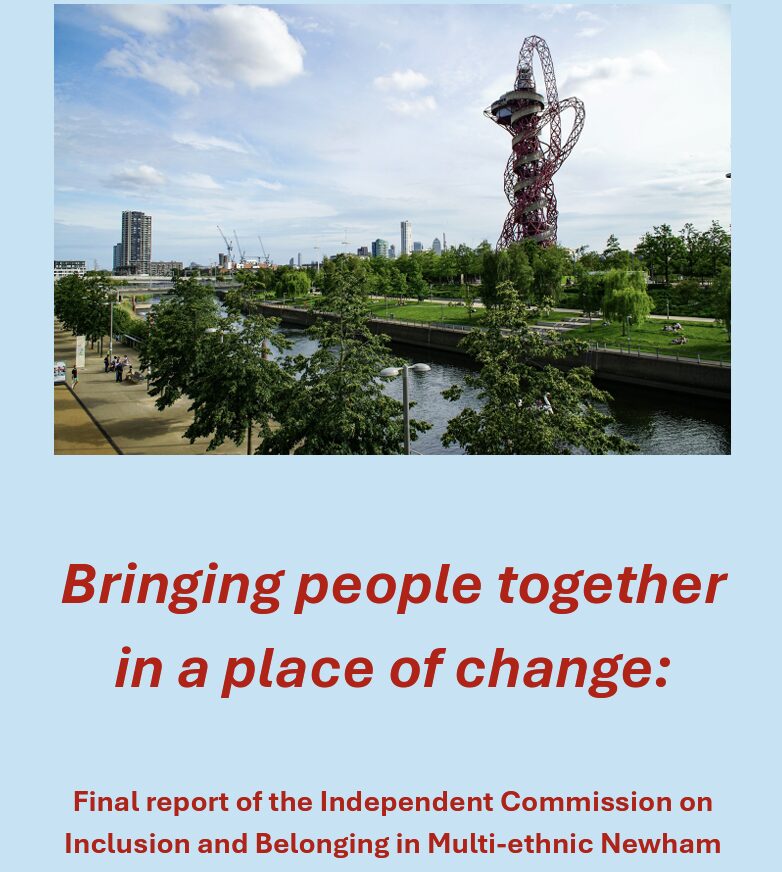
An independent commission examining inclusion and belonging in Newham – London's most diverse borough – has today published its final report, setting out recommendations to strengthen community connection and make the borough a national beacon of good practice [1/3]
"Her focus on so-called ‘pull-factors’ – an approach tried and tested without success by Conservative Home Secretaries before her – has been shown not to work." Our @sundersays on Home Secretary Shabana Mahmood's speech today.
The Modern Cockney Festival opens next week with events throughout March, including on the 16th marking the 90th anniversary of the Battle of Cable Street.
More details at: https://www.tickettailor.com/events/moderncockneyfestival
'From Diwali to Discord: What Happened to Leicester’s Shared Belonging?'
As a new report examines the 2022 Leicester unrest, our Avaes Mohammed speaks to people from South Asian communities in the city about what needs to change. [1/2]
"Rupert Lowe looks like creating a new BNP for the online age – a project doomed to fail," writes @sundersays for @easterneye [1/2]